
DLT in Buddhist Tripitaka started in ancient times. Monks kept a huge shared record of knowledge accurate for centuries. Empires rose and fell, wars raged, and no single leader controlled it. This record was the Tripiṭaka, an ancient Buddhist collection of teachings preserved through careful oral tradition before writing.
Similarly, what these monks did with the Tripiṭaka mirrors modern Distributed Ledger Technology (DLT). Although people often hear “blockchain” with Bitcoin or Ethereum, DLT is the wider base for such systems. Yet, many think DLT is a 2000s invention needing advanced computers. In fact, the core idea existed over 2,500 years ago. Monks showed DLT works without digital tech—through structured sharing, checks, and group agreement.
Why DLT in Buddhist Tripitaka Beats Central Control
Centralized systems carry vulnerabilities:
- Single points are easy to hack.
- They depend on one authority’s honesty.
- Plus processing delays occur
The Monks’ Notebook: DLT in Buddhist Tripitaka
After Buddha’s teachings, hundreds of monks across India, Sri Lanka, and beyond memorized the Tripiṭaka also known as the “Three Baskets” of teachings. Since paper was rare, they learned it word for word.
Each monk held a full copy of this vast “ledger” in memory. However, memories fade and people disagree, so they built a smart system like DLT today.
- Monks spread out in different monasteries, each holding their copy.
- They traveled and recited teachings aloud to cross-check.
- Every few years (or after big events), they held massive gatherings called councils in caves or under trees.
- At these meetings, they’d chant the entire Tripiṭaka together, line by line. If one monk said something different, the group debated and voted to stick to the agreed version.
Therefore, the knowledge and the memory was carefully controlled and checked, so it stayed accurate and couldn’t easily be altered—even through wars, changing rulers, and long periods of time. This is the concept of Distributed Ledger Technology.
What is Distributed Ledger Technology?
A ledger is a shared notebook for key events like ownership or transactions. In old days, one bank or king controlled it and set the truth. But what if it got lost, stolen, or changed by someone dishonest?
Instead, DLT fixes this. Copies spread across networks of people or computers. No single boss rules. Everyone holds the same version and checks with each other for agreement. As a result, this blocks cheating or erasing history.
Moreover, DLT records asset transactions in many places at once. Unlike central databases run by one group, DLT spreads across peer networks. Each participant (node) holds a copy. Updates build separately on each. Consensus keeps all copies the same.
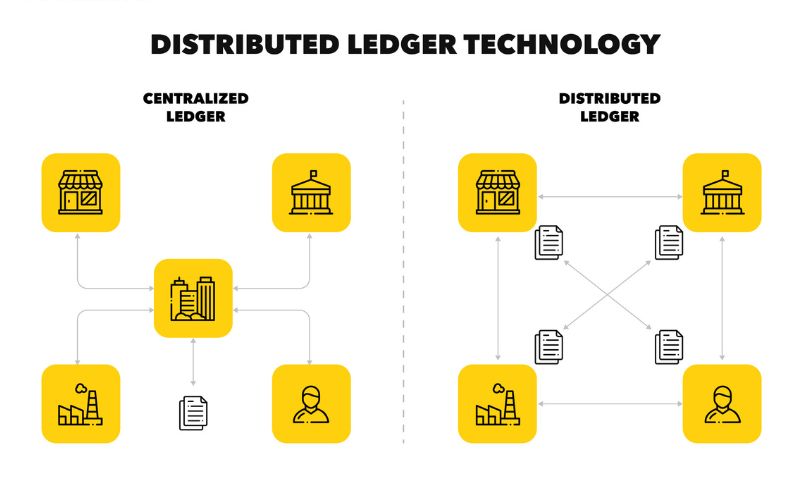
Key Components of Distributed Ledger Technology
Network Basics
- Distributed Ledger: Shared database across nodes. It gives transparency and can’t be changed easily.
- Nodes: Computers or devices holding ledger copies, checking transactions, joining consensus.
- Peer-to-Peer Network: Nodes connect directly. This shares data without central bosses for better strength.
Security and Tools
- Cryptography: Locks data and checks integrity. It keeps transactions real and safe.
- Smart Contracts: Code that runs itself when conditions met. This cuts out middlemen.
Data Features
- Blocks (in blockchain DLT): Store transaction lists linked to past ones. They makes a unchangeable chain.
- Tokenization: Turns assets into digital tokens for easy trade.
How DLT Works
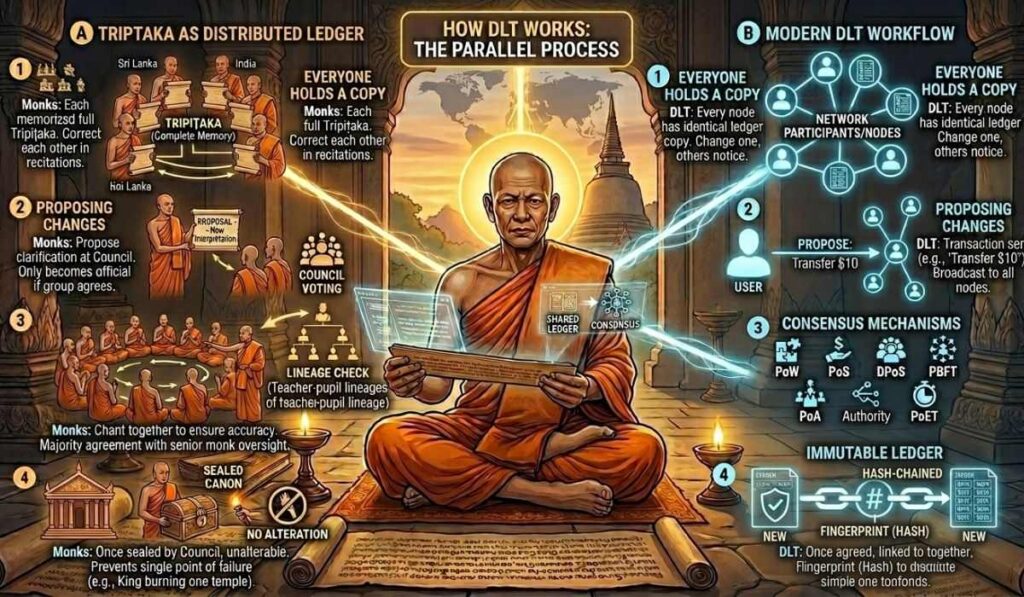
1.Everyone Holds a Copy
- Every monk memorized the full Tripiṭaka. One in Sri Lanka matched India. Errors got fixed in recitations.
- Similarly, nodes keep identical ledger copies. Change one? Others spot it fast.
2.Proposing Changes
- Monks proposed clarifications during travel or councils. It stuck only after group chant and agreement—no solo edits.
- In contrast, in DLT, a transaction like “$10 transfer” broadcasts to all nodes for review.
3.Consensus for Agreement
- Councils had monks recite together for accuracy. Disagreements used memory checks and teacher lines. Majority ruled with senior okay. Wrong ones got set aside.
- Modern DLT: Nodes vote or solve puzzles to agree. Once agreed, the update links to the old record via a unique “fingerprint” (hash). Tamper with one part? The whole chain breaks, alerting everyone. Here are the consensus mechanisms:
- Proof of Work (PoW): Nodes race math puzzles. First winner adds block; others check. Like monks’ memory contests—right version spreads. Ex: Bitcoin, Ethereum
- Proof of Stake (PoS): Validators picked by locked tokens (stake). It saves energy, keeps them honest. Like monks with more training leading. Ex: Ethereum, Cardano, Tezos
- Delegated Proof of Stake (DPoS): Users pick a small group to validate. This makes faster with user input. Like electing senior reciters to lead chants. Ex: EOS, Tron, BitShares
- Practical Byzantine Fault Tolerance (PBFT): Voting rounds handle bad nodes (up to 1/3). Like line-by-line chants debating errors till majority agrees. Ex: Hyperledger Fabric, Zilliqa
- Proof of Authority (PoA): Trusted experts take turns by reputation. It’s fast but central. Like only ordained seniors leading recitations. Ex: VeChain, POA Network
- Directed Acyclic Graph (DAG): Transactions link directly, no blocks. It scales big. Like teachings cross-referencing without full councils. Ex: IOTA, Nano
- Proof of Elapsed Time (PoET): Random wait lottery picks proposer. It’s fair, low energy. Like natural turn-taking in recitations. Ex: Hyperledger Sawtooth
4.Can’t Change the Past
- Consequently, Councils locked the Tripiṭaka—no solo changes. Later texts kept it as is. Disputes meant new councils, not rewrites.
- Thus, DLT entries stay forever. One change breaks everything. No single temple burn erases it all.
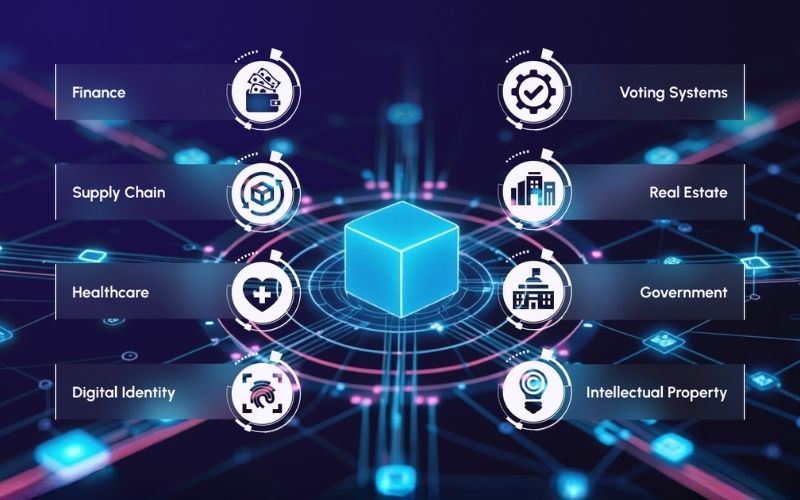
Applications of Distributed Ledger Technology
Financial Services:
- Cryptocurrencies: Bitcoin, Ethereum.
- Cross-border payments: Ripple, Stellar.
- Smart contracts: Auto-run deals without middlemen.
Supply chains:
- Track products from source to buyer: IBM-Maersk system.
- Stop fakes with unchangeable records.
Other Areas:
- Healthcare: Patient records, drug tracking.
- Voting: Secure e-voting, governance.
- Real Estate: Property deals, land registry.
DLT Strengths and Challenges
Key Strengths
- Resilience: Half the network lost? Remaining copies reconstruct.
- Transparency: All view identical records.
- Trustless: Rules enforce accuracy without full personal trust.
- Long-term efficiency: Initial effort yields lasting security.
Main Challenges
- Scalability: Struggles to handle many transactions → it can become slow and expensive (e.g., Bitcoin is slower than traditional systems).
- Energy Consumption: Some systems use a lot of electricity → they’re costly and harmful to the environment.
- Security: Generally secure, but bugs or attacks possible.
- Interoperability: Different systems don’t easily work together → limited communication between networks.
- Regulation: Laws are unclear and vary by country → this creates legal challenges.
Conclusion: Ancient Wisdom Meets Modern Innovation
Over 2,500 years ago, Buddhist monks built the world’s first distributed ledger through the Tripiṭaka—spreading perfect copies of sacred teachings across monasteries, verifying through rigorous council recitations, and achieving unbreakable consensus without paper, computers, or central rulers. This system endured wars, persecutions, and centuries, proving decentralized truth can outlast any empire.
Today, DLT recreates this timeless principle digitally: identical ledgers across global nodes, consensus mechanisms echoing monastic debates, and immutability safeguarding everything from money to medicine. Blockchain may grab headlines, but DLT’s essence—trustless networks where the group defines reality—remains unchanged from cave councils to code.
In summary, the monks teach us DLT’s true power isn’t technology; it’s human coordination conquering single points of failure. As challenges like scalability evolve, this ancient model reminds innovators: true resilience comes from distribution, verification, and collective agreement. Whether preserving enlightenment or empowering economies, the same principle endures across eras.